
School Curriculum
Nep Based Approach
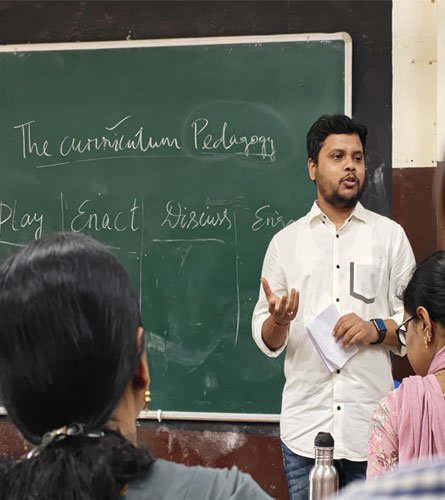
At St. Xavier's Group of Schools, the curriculum is thoughtfully designed in alignment with the National Education Policy (NEP) 2020, National Curriculum Framework (NCF) 2023, and CBSE philosophy, with the aim of nurturing learners who are curious, creative, confident, and capable of critical thinking. We believe that meaningful education empowers children not only with strong academic knowledge but also with values, life skills, and a lifelong love for learning.
The teaching-learning process emphasizes experiential, inquiry-based, and interdisciplinary learning, enabling students to meaningfully connect classroom concepts with real-life experiences. Equal importance is given to scholastic and co-scholastic learning, ensuring balanced intellectual, physical, emotional, and social development at every stage.
Our curriculum follows the NEP 2020 pedagogical and curricular structure of 5+3+3+4, carefully aligned to the developmental needs of learners across age groups.
The Foundational Stage (5years)
includes three years of early childhood education (Pre-school/ Anganwadi) followed by Classes I and II, focusing on play-based learning, foundational literacy and numeracy, and holistic development.
The Preparatory Stage (3years)
comprises Classes Ill to V, where structured learning begins through activity-based and experiential methods.
The Middle Stage (3 years)
includes Classes VI to VIII, emphasizing conceptual understanding, critical thinking, and interdisciplinary learning.
The Secondary Stage (4years)
covers Classes IX to XII, offering academic depth, subject flexibility, career orientation, and preparation for higher education and life beyond school.

Panda Cubs – Foundational Stage
Nurturing Preschool Education (Nursery to Grade Il)
St. Xavier's Panda Cubs is the preschool brand of the St. Xavier's Group of Schools. Catering to children from Nursery to Grade II (approximately 3 to 8 years), Panda Cubs provides a warm, safe, and stimulating environment where early learners are encouraged to explore, express, and enjoy the process of learning.
Aligned with NEP 2020 and the Foundational Stage philosophy, the Panda Cubs programme focuses on joyful, play-based, and experiential learning, laying strong foundations for lifelong learning. Every aspect of the curriculum is designed to support the cognitive, social, emotional, physical, and language development of the child, while respecting individual pace, interests, and abilities.
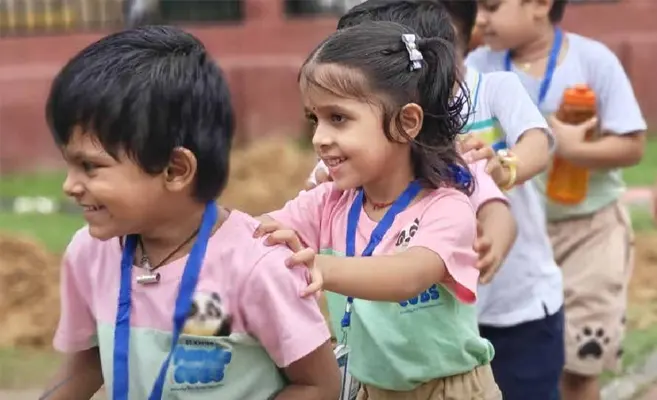
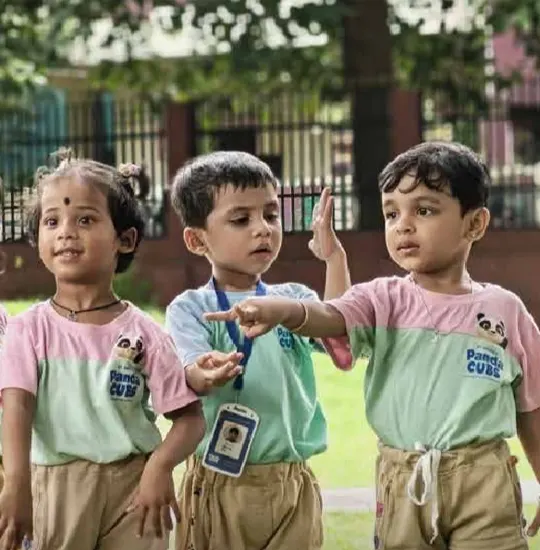
At Panda Cubs, learning is child-centered and experience-driven. Young learners engage with concepts through play, hands-on activities, stories, music, movement, and exploration. The classroom environment encourages curiosity, collaboration, and confidence, ensuring that children feel secure, valued, and motivated to learn. Research-backed and age-appropriate teaching practices help build strong foundational literacy and numeracy while nurturing imagination and creativity.

Key Learning Areas
The Foundational Programme covers a balanced range of learning domains, including Language and Literacy, Phonics and Early Reading, Numeracy and Logical Thinking, Environmental Studies (EVS), Creative Arts, Sensory Play, and Physical Development. Equal emphasis is placed on structured learning and free exploration, ensuring holistic growth and joyful engagement.
Special attention is given to social interaction, peer learning, emotional regulation, confidence building, physical coordination, and overall well-being. Through guided play and inquiry-based learning, children develop strong thinking skills, independence, and a positive attitude toward school.
Child Development Center (CDC)
A Gentle Transition from Home to School
The Child Development Center (CDC) is a unique and integral part of the St. Xavier's programme, specially designed as a transitional phase from home to school for first time school goers. Understanding that early childhood is a seansitive and formative period, the CDC offers a stress-free, nurturing, and joyful environment where children feel emotionally secure and confident to start their learning journey.
At the CDC, learning happens naturally through play, stories, music, movement, and hands-on activities.
No Books. No Copies. No Uniform. Only Fun.
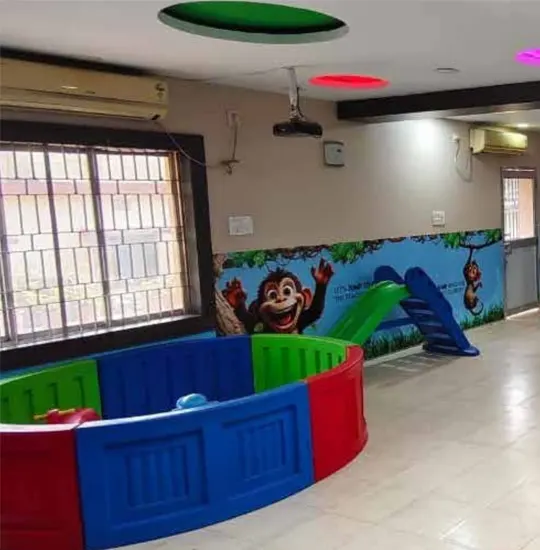
Formal textbooks and notebooks are intentionally avoided, allowing children to learn without pressure and develop a genuine love for learning. he CDC helps children build independence, social skills, curiosity, and readiness for formal schooling, while fostering a positive first experience of school lif Facilities include toy rooms, activity corners, sensory-rich spaces, meaningful visuals, portraits, and child-friendly learning zones designed to stimulate imagination and engagement.

Primary Stage (Grades III TO V)
Building StrongAcademic Foundations and Learning Habits
The Primary Stage focuses on strengthening foundational learning while gradually expanding the child's academic horizon. Aligned with NEP 2020 and NCF 2023, this stage emphasizes conceptual clarity, curiosity-driven learing, and skill development across subjects. Learers move from learning how to learnto learningwith understanding and purpose.
Teaching-learning practices remain experiential and interactive, enabling students to actively participate in discussions, projects, and hands-on activities. Equal importance is given to academic growth, values, and life skills, ensuring holistic development.
Learning Approach
At this stage, learning becomes more structured yet flexible, allowing children to explore subjects in greater depth while maintaining joy and engagement. Lessons are designed to encourage questioning, reasoning, and application of concepts to real-life situations. Teachers act as facilitators, guiding learners to think independently and express their ideas confidently.
Key Skill Development Focus
The Primary Stage nurtures essential academic and life skills that form the base for higher learning:
- Strong reading comprehension and effective writing skills
- Mathematical reasoning and problem-solving
- Observation, inquiry, and analytical thinking
- Communication and collaboration
- Digital literacy and responsible technology use
- Emotional intelligence and social awareness
Key Learning Areas
Students engage with a broad and balanced curriculum including Languages, Mathematics, Environmental Studies, Science awareness, Social Studies, Art Education, Physical Education, and Life Skills. Interdisciplinary projects and experiential tasks help learners connect knowiedge across subjects.
Developmental Outcomes
By the end of the Primary Stage, students demonstrate confidence in expression, clarity in basic concepts, curiosity for leaming, and the ability to work independently as well as collaboratively

Middle Stage (Grades VI TO VIII)
Developing Crical Thinkersand Independent Leamers
The Middle Stage marks a significant transition in a learner's academic joumey. As per NEP 2020, this stage emphasizes experientiai learning, subject depth, critical thinkno, and appiication-based understandina. Students are encouraged to move bevond memorization and engade decely weh concepts. thinkina, and application-based understanding. Students are encouraged to move bevond memorization and engage decely with concepts.
The curriculum introduces learners to discipline-based learning while maintaining interdisciplinary connections. Learning experiences become more analytical, reflective, and inquiry-driven.
Learning Approach
Teaching at this stage promotes logical reasoning, problem-solving, and evidence-based thinking. Students participate in experiments, debates, group discussions, projects, and real-world simulations that enhance conceptual understanding. Assessment practices focus on learning progress, skills, and application rather than rote performance.
Key Skill Development Focus
The Middle Stage is critical for nurturing higher-order thinking and life skills:
- Critical and analytical thinking
- Scientific inquiry and mathematical reasoning
- Effective communication and presentation skills
- Collaboration, leadership, and teamwork
- Ethical awareness and value-based decision-making
- Digital fluency and information literacy
Key Learning Areas
The curriculum includes Languages, Mathematics, Science, Social Science, Computer Science, Arts Education, Physical & Health Education, and Vocational exposure as recommended by NEP. Exposure to arts, sports, and skill-based activities helps students discover interests and strengths.
Developmental Outcomes
Students emerge as independent learners who can analyze information, express viewpoints logically, collaborate effectively, and take responsibility for their learning.

Secondary Stage (Grades IX TO XII)
Preparing Responsible, Skilled, and Future-Ready Citizens
The Secondary Stage focuses on preparing learners for higher education, careers, and responsible citizenship, in alignment with NEP 2020, NCF 2023, and CBSE guidelines. This stage emphasizes choice, flexibility, depth of learning, and skill integration, allowing students to align education with their interests and aspirations.
The curriculum balances academic rigor with life skills, ethical values, and career readiness.
Learning Approach
Learning becomes learner-driven and goal-oriented, with emphasis on conceptual mastery, critical analysis, and real-world application. Students engage in research-based projects, presentations, internships, community engagement, and interdisciplinary learning experiences. Continuous assessment supports reflection, improvement, and growth.
Key Skill Development Focus
The Secondary Stage strengthens advanced competencies essential for future success:
- Advanced critical thinking and problem-solving
- Research, innovation, and analytical writing
- Leadership, collaboration, and decision-making
- Career awareness and vocational skills
- Digital citizenship and ethical technology use
- Emotional resilience and self-management
Key Learning Areas
Students study core academic subjects along with electives, skill-based courses, arts, sports, and vocational options, promoting flexibility and personalization as recommended by NEP. Career guidance and mentoring help learners make informed academic and professional choices.
Developmental Outcomes
By the end of the Secondary Stage, learners are confident, competent, and future-ready, equipped with academic excellence, strong values, adaptability, and a lifelong love for learning.